Research communication
Most research never reaches the people who could use it. In 2024, Cobo won an Innovate UK grant to test whether AI could close that gap.
It does, but what comes out is not always accurate. An AI tool will summarise a paper and attach a citation, which looks like proof the summary is right. But a citation only proves the source exists. Someone still has to check the interpretation.
That is a design question as much as a technology one. A studio that specialises in communicating science should be able to answer it with evidence rather than an opinion. This page is what we can say.


Where this started
This didn’t start with a client. In 2023, we found ourselves reading a great deal of published research for personal reasons, and we ran into how hard it is to know what a paper actually says when you aren’t the specialist who wrote it. We wondered whether AI could help.
In 2024 we won an Innovate UK grant through the DCMS Create Growth Programme to find out, which included building a first working prototype.
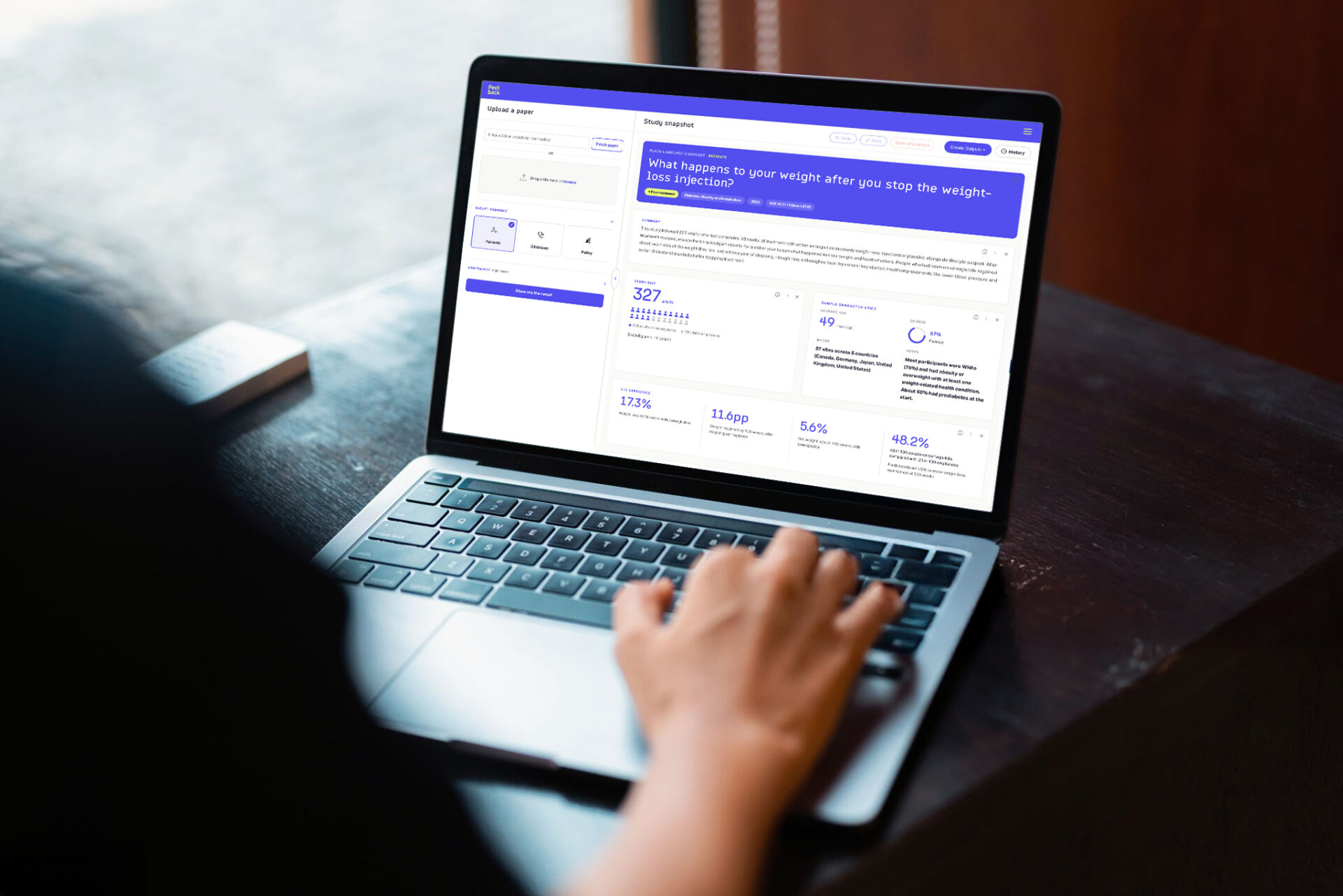
That work became Peelback, now a separate company founded by the same two people who run Cobo. It went on to win its own Innovate UK award and took the question much further than we could have as a studio.
Supported by





What Peelback found
Peelback ran a six-month discovery project with the University of Exeter, chosen from four for its medical research specialism and Russell Group status. Peelback’s own Innovate UK award paid for it. 152 people took part, from published researchers to policy, commissioning and industry professionals, patients and clinicians.
The project went in thinking about simplification and came out designing for translation: the same finding, communicated differently to different audiences, for different purposes.
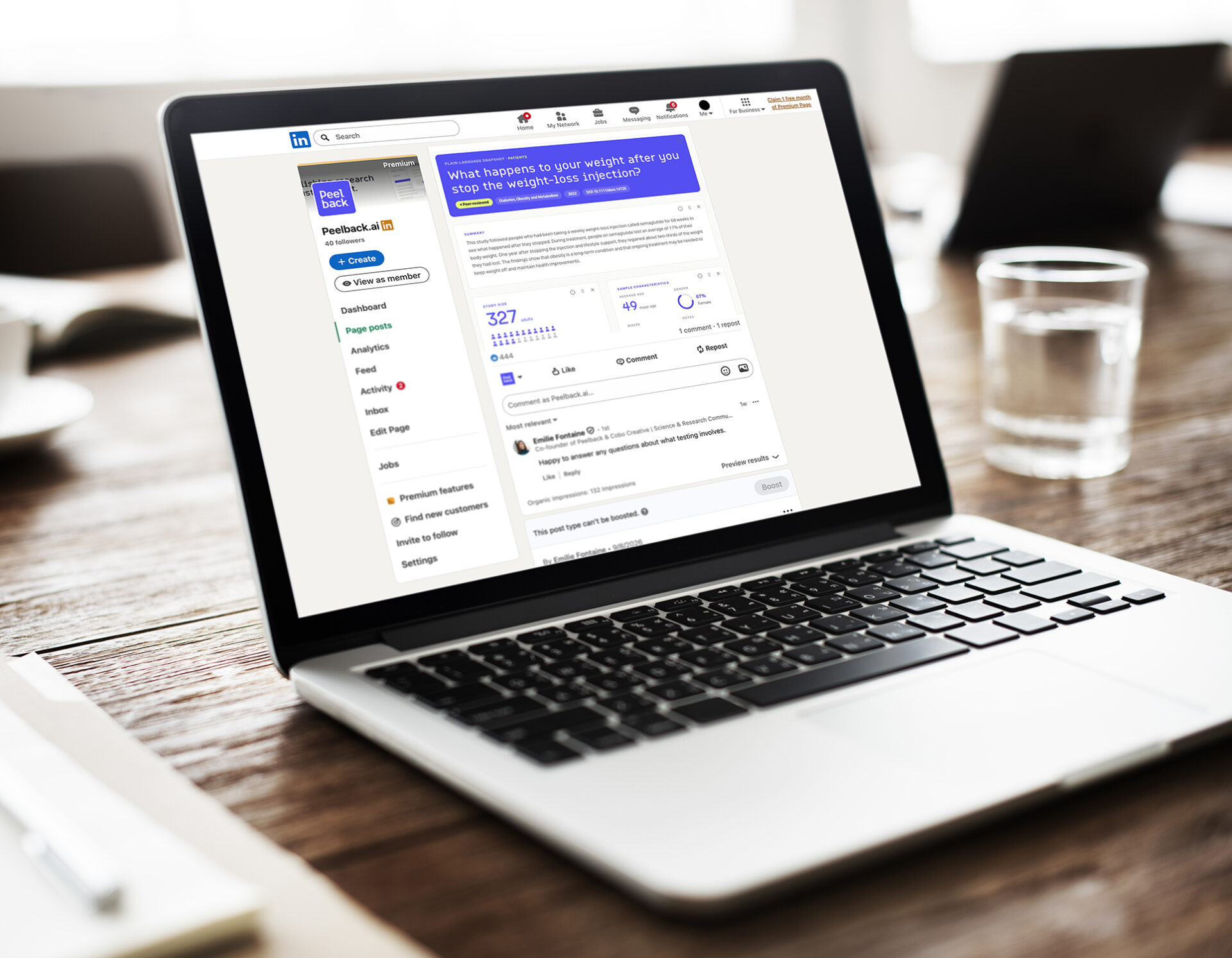
What came next is that finding turned into software, on a framework written to Peelback’s UX direction by a team of four it recruited from the University of Plymouth. The platform turns a published paper into the outputs a finding needs to travel: study snapshots, conference posters, microsites, slide decks and social posts. Custom infographics are generated from the paper’s own data and arrive inside the first draft, not as a separate job. Everything is editable block by block, with no other design software needed. Nothing is shared until the researcher has verified it. The AI drafts, the author decides.
The full report is published at peelback.ai, and Peelback wrote about the trust question behind it for the LSE Impact Blog: “When AI communicates research, who signs it off?”
Peelback is testing with industry and academic partners and is looking for pilot studies. If that is you, start here.